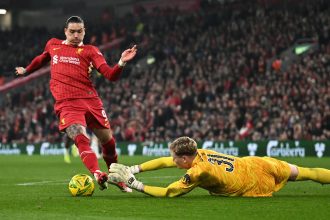
LAS VEGAS — It is the best-worst-weirdest of times for the Pac-12 Conference, which comes together in the desert this week for a veritable Victorian Era drama that will play out on a football field.
There is pride. After toiling for years as the least powerful of the Power 5 football conferences, the Pac-12 is having a rebirth. It currently has six teams ranked in the top 17 in the AP poll for the first time in its history. The league has depth and talent and excellent coaching and dynamic quarterbacking. Correspondingly, it has a great shot at its first College Football Playoff bid since 2016.
And there is prejudice. The school carrying the Pac-12’s CFP hopes into the Friday night conference championship game is No. 4 USC, which along with crosstown co-conspirator UCLA is dumping the league for the Big Ten come 2024. (Unless the Bruins get caught in a Board of Regents bear trap on the way out. More on that later.) As Pac-12 standard bearers go, the Trojans aren’t the ideal choice. The two Los Angeles schools have engendered deep animosity by imperiling the conference they are leaving.
Charles Dickens’ opening sentence of might as well have been written about the Pac-12 in 2022: “(I)t was the season of Light, it was the season of Darkness, it was the spring of hope, it was the winter of despair, we had everything before us, we had nothing before us…”
A playoff contender has been desperately sought by the Pac-12, which has the fewest CFP appearances of any Power 5 conference (just two, Oregon in 2014 and Washington in ’16). But did it have to be , just five months after making their departure from the league official?
“I’ve been incredibly clear since announcements were made on June 30th that as long as those two schools are in our conference, we’re going to get behind them and help them be successful,” Pac-12 commissioner George Kliavkoff says.
But the conflicting emotions are real. This is an exercise in staying present and taking what the league can get before it’s gone.
“I’ve just honestly put my head in the sand and not thought about what’s to come,” says Fox TV analyst and former Washington Huskies quarterback Brock Huard, who will be on the call for the game Friday. “I don’t mean to dodge it, but I’m living in the moment. I know (the Trojans) are leaving eventually, but while they’re here the league can reap the attention and the revenue and the ratings eyeballs that come with USC being good.”
There are substantial things to be gained by the Pac-12 from having a team in the playoff — $6 million in league revenue, plus a huge jolt of exposure and a renewed infusion of respectability. The annual storyline about trailing the rest of the Power 5 could be put to bed for the moment, at least. And one ripple effect from a West Coast playoff team could be fewer California kids leaving the region for college. (Of the Class of 2023 top 15 players in the state according to rivals.com, three have committed to Pac-12 schools, five to SEC schools, three to Louisville and two to Notre Dame.) If they believe they can play for a national title while staying home, that’s good for everyone in the Pac-12.
(That premise got a formal jolt of adrenaline Thursday morning with the official announcement that the CFP will expand to 12 teams in 2024, with the six highest-rated league champions guaranteed spots. In the Pac-12’s first season without USC and UCLA, it will be a virtual lock to have a playoff team.)
But, still, the premise of USC’s rising tide floating all boats has an expiration date. And thus common sense and human emotion dictate that the vast majority of the conference will be rooting for Utah Friday night. Washington, which will go to the Rose Bowl if USC wins and grabs the playoff spot, will not. And perhaps not UCLA (although rooting for USC does not come easily in Westwood, at least prior to the schools making their escape pact). Everyone else likely lines up behind the Utes.
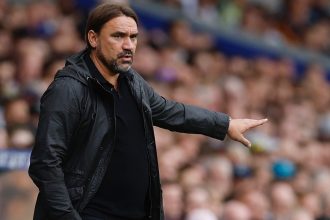
They are the sense and sensibility of the Pac-12, with an old-school coach in his 18th year in Kyle Whittingham and a playing style that added some meat-and-potatoes heft to a lightweight league in recent seasons. They are the antithesis of L.A. sizzle in many ways. And they are proud Pac-12 members (for now, because you never know).
“It’s exciting to play USC for any team, but I think it’s good for Utah to play USC,” Utes athletic director Mark Harlan says. “It always brings out that extra step in us. I think we all in the league have worked hard to support our programs to have the opportunity to get back in the College Football Playoff. We’ve worked very hard to be back in this position. I think it’s exciting in that way.
“Like everybody, I was shocked when the L.A. school announcement came down. I was concerned about our league, about the University of Utah and how this will all look. But that’s been a journey of a few months, and I think of the incredible job our commissioner has done. I feel a lot better today than I have. I still am disappointed we’re losing schools, but I also know the 10 that are left are pretty special, and I think there will be an opportunity to add more, if they make sense.”
That’s down the road. For now, the sequence of events in terms of assessing the future of the Pac-12 is as follows:
UCLA’s Board of Regents is scheduled to meet (again) on Dec. 14, at which time it is expected to either sign off on the Bruins’ departure for the Big Ten or throw some sort of wrinkle in the plan. The wrinkle could be requiring UCLA to share some of its massive future Big Ten revenue to fellow UC System and Pac-12 brother Cal-Berkeley. Or it could pause the proceedings. Or it could be as drastic as roadblocking the move altogether. While the last of those options would seem unlikely, the longer this goes the more you wonder (and it’s been going for a while now).The league will come to a media rights agreement, likely sometime in 2023. Kliavkoff points out that with the Big 12’s new deal done, the Pac-12 has the floor to itself and there is no rush for his conference to finalize anything. Conference sources said that given the likelihood of new, non-linear broadcast partners in the deal, this is less of a conventional process than others and requires a lot of consideration. And as Kliavkoff points out, “The price is not going to go down. It’s going to go up.”
* After that deal is done, the conference can gauge whether it wants to expand. Kliavkoff noted Thursday that bigger is not automatically better, and that a membership of 10 to 12 might be preferable to 16. The commonly mentioned schools that could be targeted start with San Diego State and SMU. Other Mountain West schools would love to get onboard, with UNLV perhaps best positioned while still being a terminal football underachiever. Gonzaga is making inquiries with multiple conferences as a non-football member.
Before all that, though, there is this football game Friday. Events elsewhere have conspired to make the Pac-12 title contest the most interesting and impactful of all the conference championship games in playoff terms. The SEC and Big Ten games are almost non-events—No. 1 Georgia and No. 2 Michigan can survive a shocking upset loss and still make the four-team field. TCU, ranked No. 3, can likely do the same against No. 10 Kansas State. But USC, at No. 4 and with one-loss Ohio State lurking directly behind it, probably has to win to get in.
There will be high drama at Allegiant Stadium, in a rematch of a one-point thriller won by Utah in October. For the first time in a while, the Pac-12 has commanded the nation’s attention in December.
“A year and a half ago, we called on all our schools to invest in football and they answered that call,” says Kliavkoff, who came in as commissioner in the summer of 2021. “I didn’t expect the dividends to be seen so quickly.”